Top Fintech & Investment Website Design Agencies UK


When a third of UK adults say they worry that a fintech might fail and take their money with it, trust becomes the entire design brief. That finding, from an Edelman Smithfield study shared by IBS Intelligence, shows what investment and financial sites look like in 2025. People don’t just want polished visuals or moving charts. They look for small signs that a platform is built right, such as pages that guide them clearly and data they can trace.
Here’s what that looks like in practice. The best agencies make complex platforms easy to read without losing precision. You’ll meet the UK teams leading that shift and see how financial website design services are evolving this year. Whether you’re planning a redesign or choosing an agency, this guide shows what makes a financial site easy to trust.
What Makes a Great Fintech Web Design Agency?
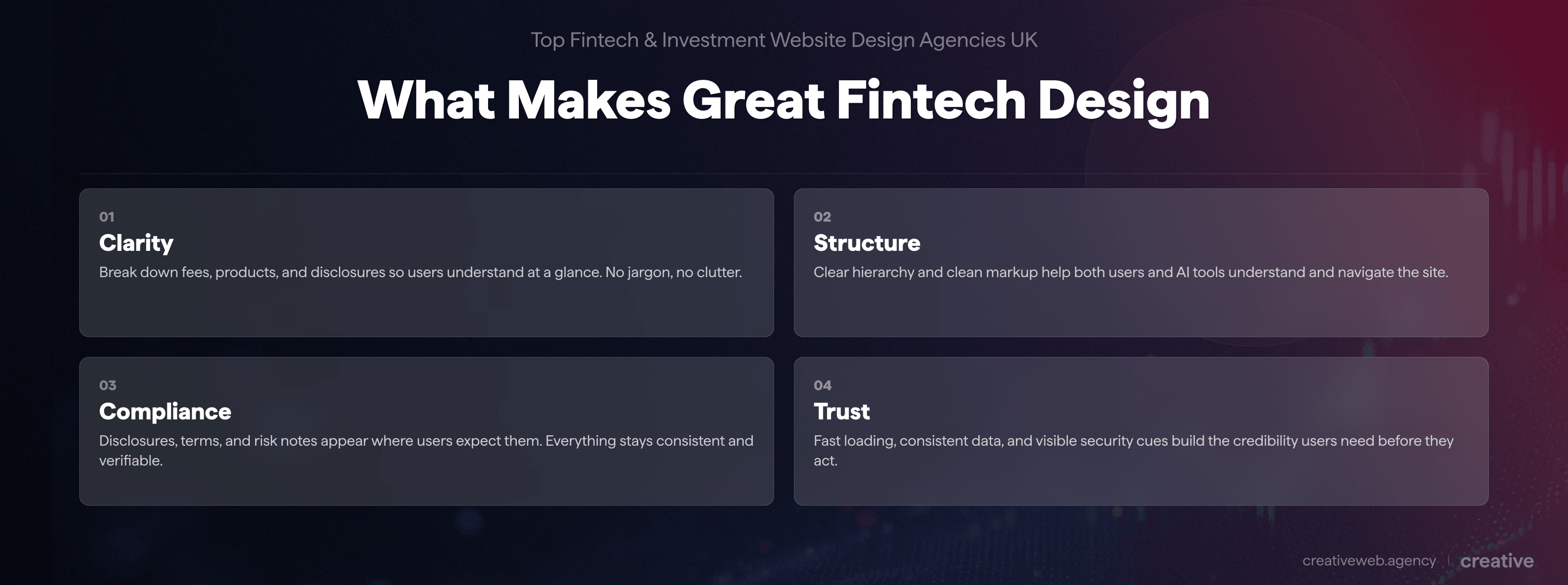
A good financial web design agency simplifies things. It looks at how each page works on its own and how the whole site fits together. Users judge a firm in seconds, so the design has to earn trust straight away.
Clarity. Money topics get confusing fast, so the pages should break things down clearly. Headings need to make sense at a glance. Text should stay readable. Layouts should help people understand fees, products, and disclosures. No jargon unless it’s explained. No clutter.
Structure. A site with order feels credible. Pages should follow a clear hierarchy; sections need to break down tough topics so people don’t get confused halfway through. Clean markup helps search engines and AI tools understand what’s on the page. When the structure is right, the site is easier to navigate and easier to find in search.
Compliance. Users look for proof that a financial brand takes rules seriously. Disclosures, terms, risk notes, and regulatory details should appear where people expect them. They should come across clearly and stay consistent. The design has to present all required elements without cluttering the page. Everything should be easy to verify.
Trust. A 2024 techUK report found that 47% of UK adults would stop trusting a business after data mishandling, so the site has to present information in a way that avoids doubt. Trust builds when a site feels stable and credible. Pages should load fast. Numbers and details need to stay consistent across every page. Security cues need to be clear enough that people notice them easily. When the facts line up and the design stays solid, users believe the company behind it knows what it’s doing.
Who’s Shaping Financial Web Design in the UK Right Now?
Many teams can make a site look good; however, far fewer can make a financial website that feels clear, steady, and credible. These UK agencies prove it’s possible to build trust and function into the same design.
CreativeWeb
Website: https://dev.cbwebsitedesign.co.uk/
Location: London | Surrey
Past/Present Clients: Strata, 4media group, First Jets, GreenAcres
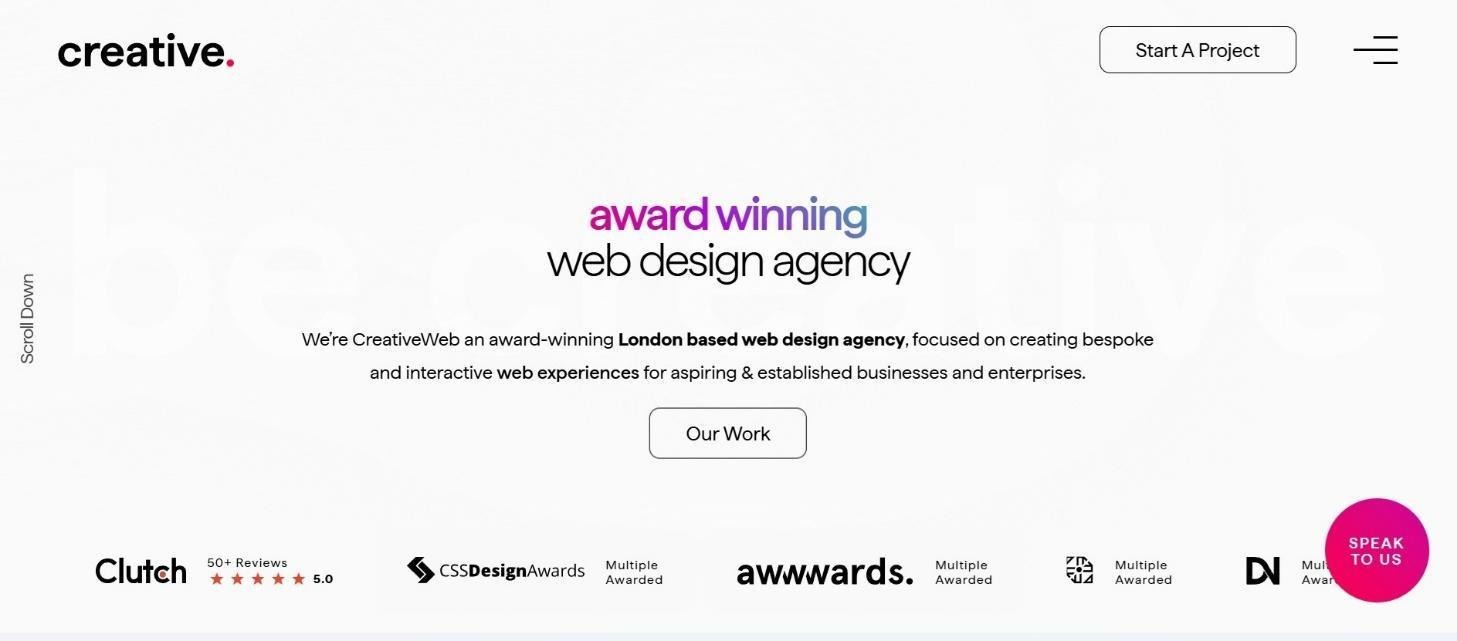
We’ve spent the past decade designing for industries where every figure has to hold up, mostly finance and investment, sometimes deep tech. The NATO Innovation Fund is a milestone for us. The challenge was to reach deep-tech investors and founders in one voice. We added interactive elements that made a dry subject easier to explore. That strategy drew people in because the site finally felt engaging to use. Traffic jumped more than 200% after launch. Later, Awwwards and the London Design Awards both awarded the NIF website for excellence in design.
The NATO Innovation Fund site followed the same approach we use for financial and investment websites. The information had to land cleanly, so we focused on what people would read first, not the exterior polish. We shaped the flow so readers could navigate it effortlessly. With subtle animations, interactive features, and a modern, high-contrast design, the site communicated NIF’s focus on innovation.
Our designs support the content without overshadowing it. The copy, the visuals, and the layout work cohesively to guide users. We use interactive elements when they help explain something. That same method guides our every project. We aim for clear messages, well-structured pages, and a design people can trust from the get-go.
We code everything in-house on a lightweight framework and build it to stay fast, readable, and easy for AI tools to crawl. We design in Figma, check the builds as they take shape, and keep tweaking until every click earns its place. Our ISO credentials and Google Partner status back what we do, but the real proof is the number of projects we successfully deliver annually. We handle about 50 projects a year, fully built by our team from start to finish.
We don’t treat trust like a feature; it’s the foundation supporting everything else.
Get a free website audit
See if your financial website communicates trust clearly and meets today’s design standards.
Get My Free AuditMadeByShape
Website: https://madebyshape.co.uk/
Location: Manchester
Past/Present Clients: NHS, BBC, Selfridges & Co., L’Occitane, Blackberry
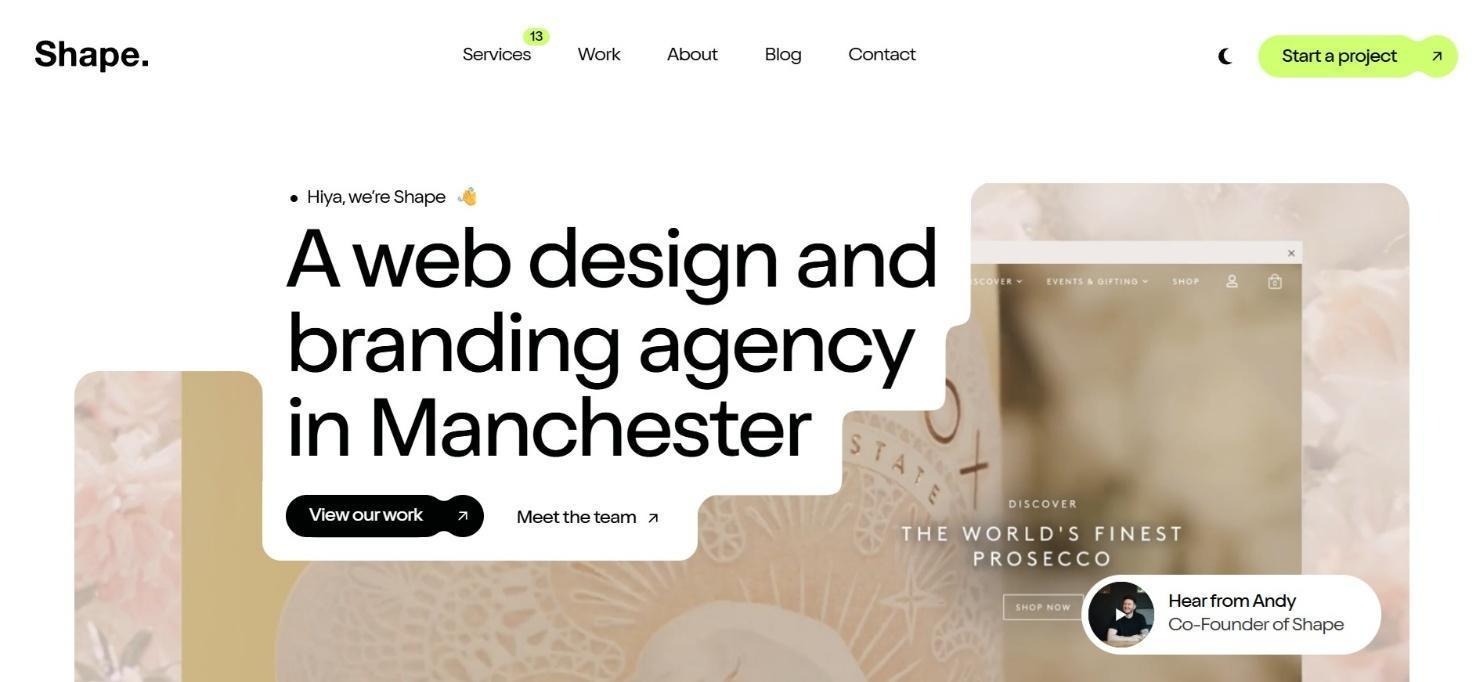
MadeByShape has been building trust online since 2010, helping brands turn hesitant clicks into real engagement. The team builds mostly on Craft CMS and Shopify – a setup that gives fintech and investment clients room to adapt while keeping tight control of data and speed. And as a verified Craft CMS partner, they focus on sites that load fast and stay easy to manage as they grow.
Many financial sites trip up by burying what matters under noise, like too many widgets and not enough clarity. MadeByShape cuts straight through that disruption. They design pages that behave like a good analyst: fluent in numbers and clear in how they speak to users.
Their UX and eCommerce work follow the same logic. Visuals stay clean, and the layouts guide users through complex products without friction.
MadeByShape’s team has worked with more than 250 clients around the world. About 55% came through referrals, which says a lot about how their work holds up once the projects end. Long-term help is part of their core service. Through “Shape Support,” clients can keep tweaking, updating, and improving their sites after launch.
MadeByShape pairs technical care with design that feels reliable. In a market built on speed and trust, this mix keeps them among the top UK financial web design agencies.
Qubstudio
Website: https://qubstudio.com/
Location: London | L’viv (Ukraine)
Past/Present Clients: Loan Mantra, Ozone API, Ademrius, LinkIt!
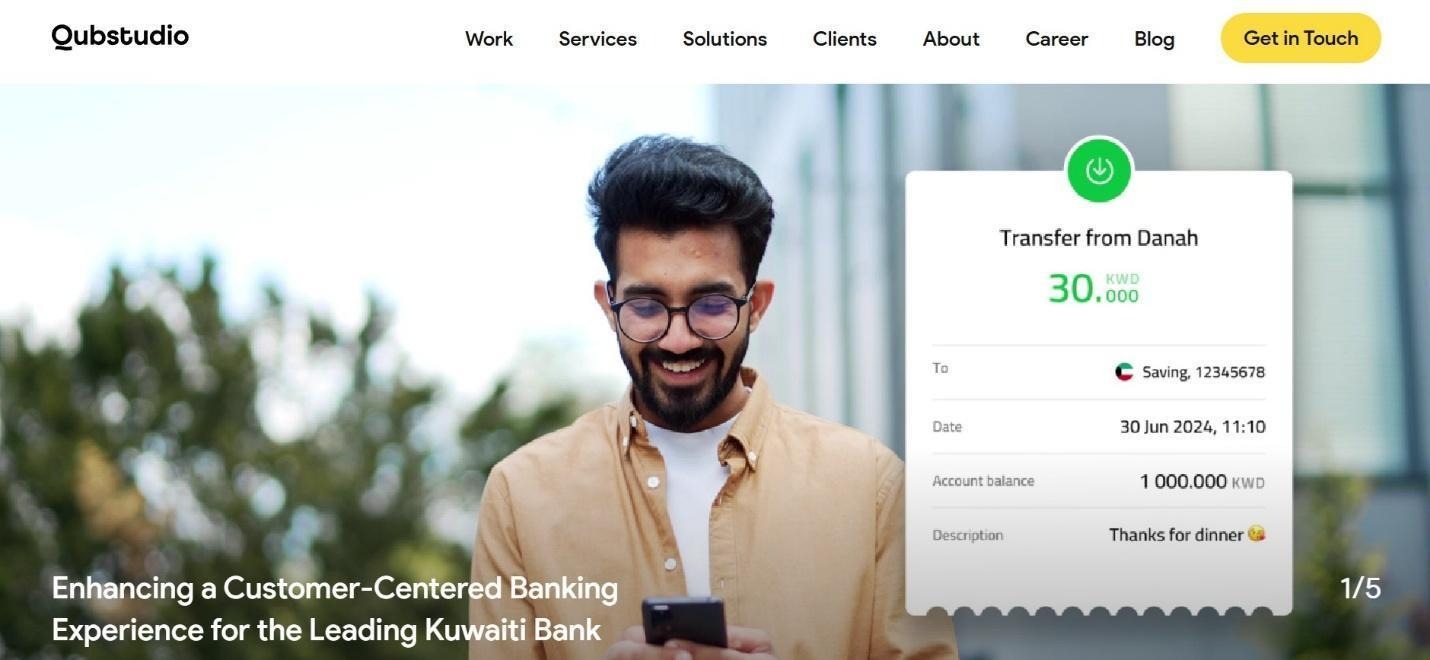
Qubstudio started designing digital products in 2007, back when online banking still felt experimental. Based in the UK and Ukraine, the team bridges two design cultures – one focused on compliance, the other on innovation.
For fintech and investment brands, Qubstudio’s strength is clarity. They take what’s complicated and make it workable. The team turns heavy, cluttered dashboards into steady, usable tools that make tough calls easier to handle. They’ve worked across banking systems, payment tools, and investment platforms, where a single confusing chart can cost real money. Each design choice gets tested (type, layout, flow) to catch friction early and prevent costly errors later.
Qubstudio’s clients range from early-stage fintech founders to established banks. They help shape first ideas into working products and keep improving them once they’re live.
They’ve handled more than 700 projects and earned a 4.9 score from 80+ verified Clutch reviews. Clutch lists it among the top UX agencies, and its Red Dot and UX Design Awards back that up.
Plug & Play
Website: https://www.plugandplaydesign.co.uk/
Location: Guildford | London
Past/Present Clients: Tesco, British Council, Mercer, WWF, Capita
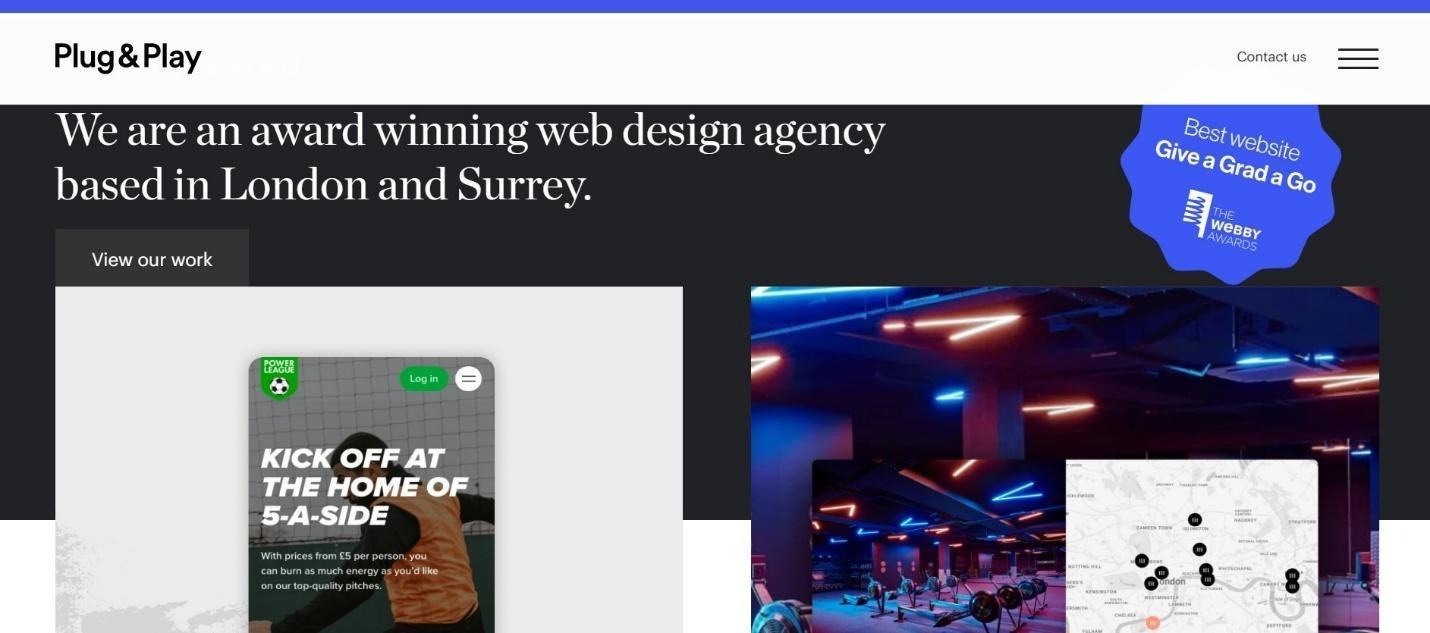
Plug & Play builds high-performance websites that help financial brands hold their ground in crowded markets. The team partners with both long-running firms and ambitious start-ups, the ones that see their sites as part of their sales engine.
And the results show it. Across projects, most clients see search visibility jump by around 375% within three months of launch. Those numbers come from before-and-after tracking. For fintech and investment firms, that boost can move the needle fast both in traffic and investor trust.
Plug & Play suits finance because it works like the sector itself, careful with detail, but sharp about results. All the work stays in-house. Designers and developers build side by side so that compliance, branding, and site speed stay aligned instead of competing for attention. Most of their financial sites run on WordPress or Webflow, which are stable enough for regulated teams and flexible enough for fast edits.
Their discipline shows up most clearly in the way they build. Accessibility and data security aren’t bolted on later but baked into each build. Recognition from the Webbys, The Drum, Clutch, and a 4.9 Google Rating validate their work – a testimony that solid code and good design can live in the same place.
The Smarter Web Company

Website: https://www.smarterwebcompany.co.uk/
Location: Surrey
Past/Present Clients: JETS, Cleantech Wholesale, Clifton PF, Cohesion Investments
For investment teams trying to manage time, cost, and trust at once, The Smarter Web Company delivers results that look professional and meet sector standards without the premium price tag. Their approach fits financial and investment teams that want visible gains quickly instead of costly rebuilds. They start small, usually fixing what matters first, like site visibility, ad spend, or conversion flow.
While bigger agencies build around long strategy cycles, Smarter Web Company keeps things simple and moves fast enough to show results early. Pages are laid out for clarity. They’re easy to read and verify. Built-in calculators and simple CMS tools let teams break down complex data without losing accuracy.
Their builds are easy to manage and mobile-ready, so clients can post investor updates or compliance notes the moment they need to. That setup works well for listed firms and scaling fintech companies that deal with constant disclosure and reporting cycles.
Inbound FinTech
Website: https://www.inboundfintech.com/
Location: London
Past/Present Clients: ConnexPay, Millbrook Business Finance, Apply Financial, 1623 Capital LLC
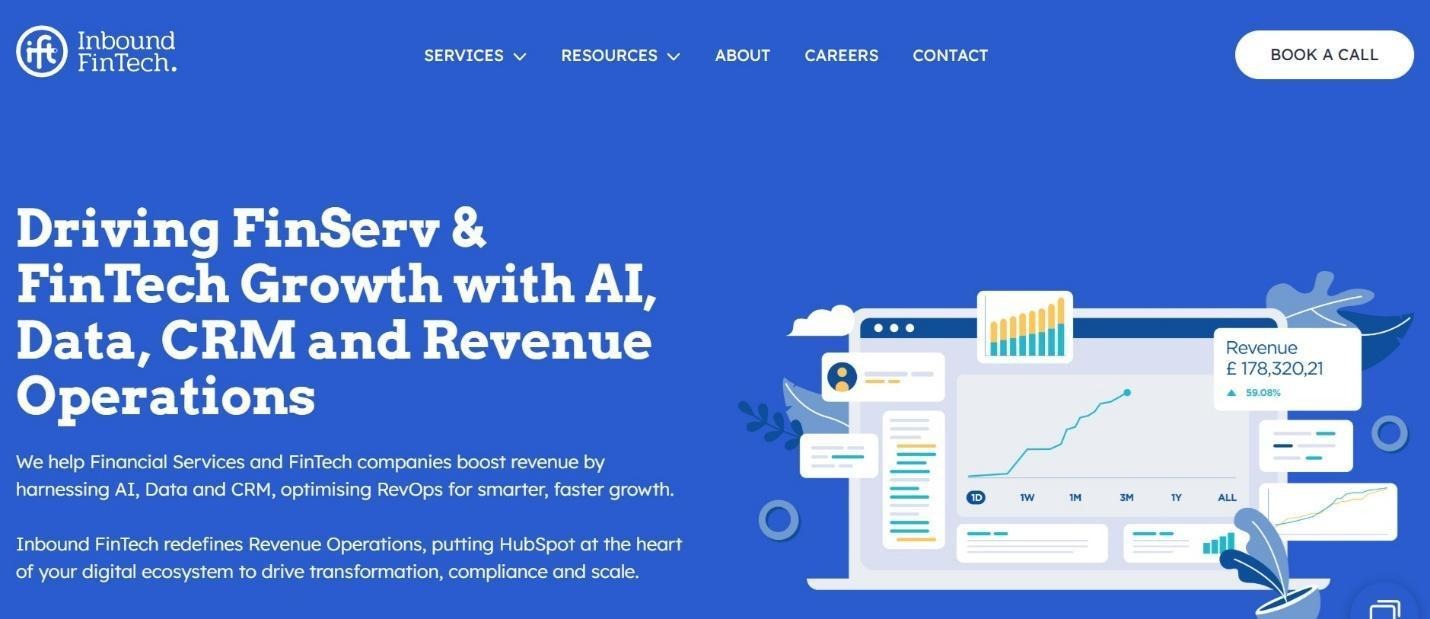
Inbound FinTech works more like a consultancy than an agency, but its design team still builds some of the most complex financial sites in the UK. Working out of London’s financial district, the team blends design, RevOps, and HubSpot strategy into one workflow. It keeps brand clarity, data control, and compliance moving together instead of in silos.
They build on HubSpot CMS, with analytics and SEO at its core. This makes fintech products easier to find and trust. Every build starts with regulation and data integrity before design even enters the picture.
Inbound FinTech treats design as part of strategy, where every choice aligns with business goals and how AI tools will read the site later on. The outcome is a site strong enough to scale, compliant enough to last, and smart enough for AI to understand.
Their habit of building secure frameworks with transparent data flow keeps them in demand by banks and fintech companies rebuilding older systems.
Pixel Kicks

Website: https://www.pixelkicks.co.uk/
Location: Manchester
Past/Present Clients: Christy, The University of Manchester, Flowtech, UA92
Pixel Kicks builds websites that feel like working products: fast, practical, and built to last. The team has spent a decade shaping sites that perform first and impress later. They work across WordPress, Shopify, and Webflow, giving financial firms options that stay scalable, structured, and steady under pressure.
Pixel Kicks designers collaborate closely with their developers, testing how real users move through data-heavy screens. Each build meets strict development standards and goes through stress tests to prove speed and consistency across devices.
After launch, Pixel Kicks stays closely involved. The team runs digital marketing alongside developers, covering SEO, paid ads, and content that generates real leads. For financial and investment companies, the kind of follow-through that keeps design choices linked to real numbers, rather than surface polish, is crucial.
Trends and Insights: How 2025 Redefines Financial Web Design
AI is already changing how investors read information and make decisions about which platforms to trust. A 2023 McKinsey survey of 75 CFOs found that nearly a quarter were exploring generative AI in finance, with a few already running pilot programs. This push is now changing how financial websites are planned and maintained.

- Explainable AI (XAI) interfaces
More than 70% of banks using AI say their biggest regulatory worry is not being able to explain how it works to others. Explainable AI helps fix this by making automated decisions easier to understand and justify. Fintech users now expect to see how automated decisions are made in credit checks, fraud alerts, or portfolio advice.
XAI makes that visible through models and summaries that show which factors influence results. This transparency now sits at the centre of UX, helping firms stay compliant and show users that their data is treated fairly. Interfaces that show this logic clearly give investors more reason to trust what they see on screen.
- Modular dashboards
Financial platforms are moving away from rigid templates to modular dashboards that scale with data and service growth. For traders and portfolio teams, this means real-time data and tools shaped around their daily decisions. The outcome is a site that runs light, loads fast, and simplifies complex data. It also gives developers room to expand without breaking what works.
- Voice search optimisation
Nearly one in five people now use voice search. In finance, this trend includes secure voice prompts for checking accounts or verifying users. Sites optimised with structured data and clear markup are more likely to rank higher when users ask voice assistants for rates or fund details, giving these sites a small but growing edge in discoverability.Across these trends, the agencies leading the sector focus on clarity over novelty. A bespoke website design still matters as long as it remains easy for both people and AI tools to read.
FAQ
-
How do you measure ROI for financial website design?
-
ROI in finance sites is measured through user behaviour, like how fast people find what they need and whether they come back to act on it. Tracking logins, submissions, or fund-page visits says more than traffic counts ever will. A proper website audit also reveals whether slow loads or messy layouts stop users from converting.
Did this answer your question? YesThat’s great glad we could help! Start a ProjectNoNo problem, one of our experts can give you a more in-depth answer. Ask our Experts -
What is the typical cost of building a fintech or investment website?
-
Budgets vary depending on the scope. A simple site might start around £5,000, while a bespoke build becomes more costly once you add integrations or compliance layers. Sites with dashboards, multiple languages, or investor portals cost more because of the testing and security work behind them. Good agencies show costs early, or provide a tool like our Cost Calculator, linking every expense to a clear goal instead of guesswork.
Did this answer your question? YesThat’s great glad we could help! Start a ProjectNoNo problem, one of our experts can give you a more in-depth answer. Ask our Experts -
How should financial websites handle regulatory design?
-
Compliance isn’t a separate task; it has to live in the design. Pages that show disclosures clearly and keep terms easy to find help users avoid mistakes and keep regulators calm. Each update should leave a clear trail, with approvals logged to keep everything verifiable.