10 Benefits of Email Marketing (and Why Most Businesses Still Get It Wrong)

Let’s be honest: there are already dozens of articles listing the benefits of email marketing. Most of them give you 25 generic points, sprinkle in the same recycled stats and call it a day.
This one’s different. We’re focusing on the benefits that actually matter if you’re running a small business, with real numbers, practical advice and the bit nobody else wants to include: what email marketing won’t do for you.
The best ROI of any marketing channel
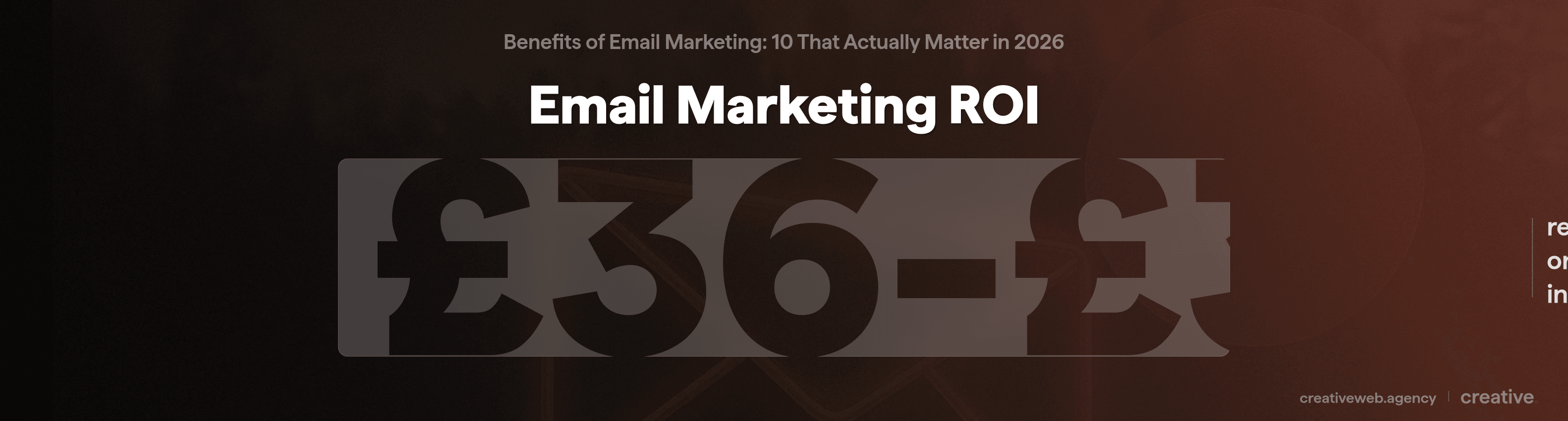
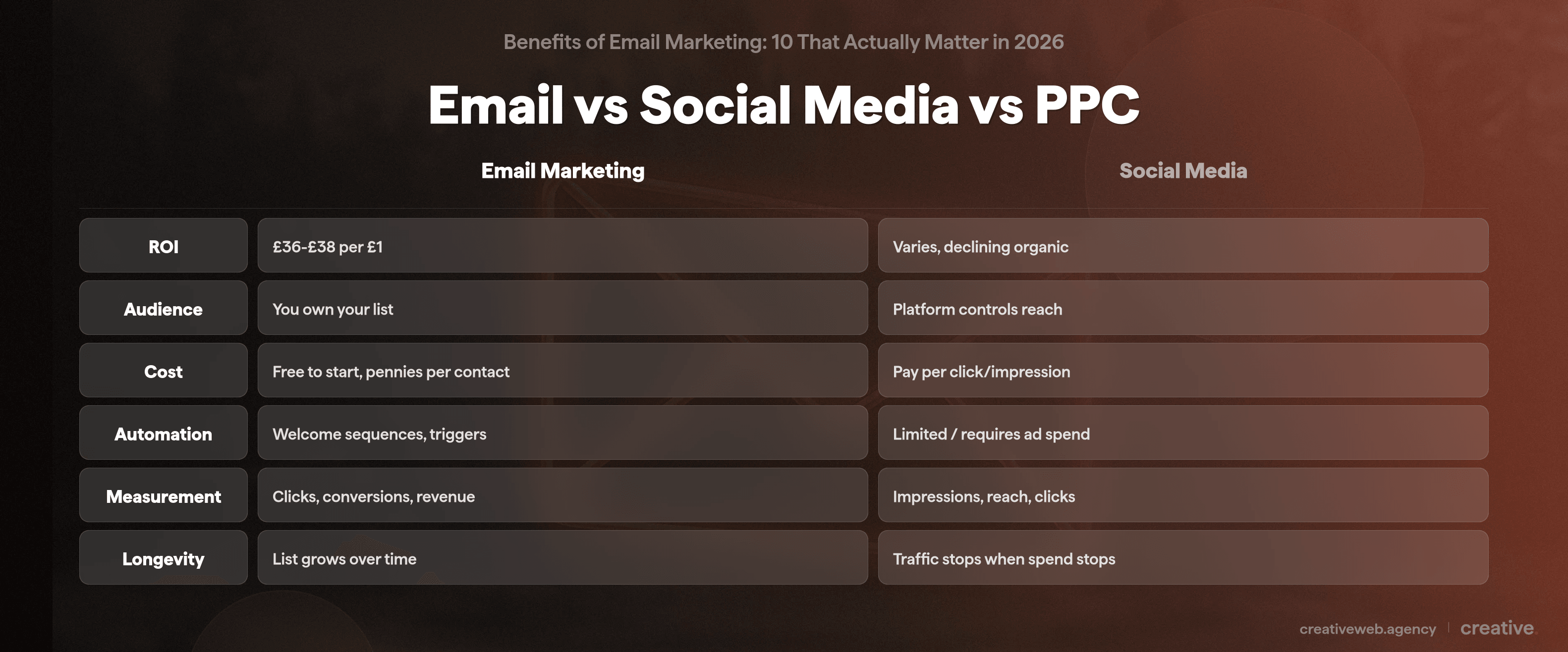
For every £1 you spend on email marketing the average return sits somewhere between £36 and £38. That number comes from the DMA’s Marketer Email Tracker and it’s held steady for years.
No other digital channel comes close. PPC will charge you per click with zero guarantee anyone converts. Social media keeps throttling organic reach unless you pay to boost. Email just quietly delivers.
But that ROI figure only holds up if your list is clean and your content is worth opening. We’ve seen businesses get excited about email, buy a list of 10,000 contacts and wonder why their open rate is sat at 2%. A bought list isn’t a shortcut. It’s money down the drain.
You own your audience
This is the benefit that doesn’t get talked about enough. Your Instagram followers aren’t yours. Your Facebook page likes aren’t yours. One algorithm update and your reach drops off a cliff.
We’ve watched it happen. Businesses that built everything around Facebook organic reach had a rough couple of years when Meta changed the rules.
Your email list is a direct line to people who’ve opted in. You control when you send, what you send and who sees it. No middleman, no algorithm, no pay-to-play.
And if you’re in the UK there’s a GDPR angle too. A properly consented email list is actually more valuable than a big social following because every person on it chose to be there. That’s not a limitation, it’s a feature.
If you want to see how email fits alongside other channels we’ve written about marketing on Pinterest which is a good comparison.
Personalisation that actually works
Everyone talks about email personalisation. Most people’s version of it is sticking a first name in the subject line and leaving it at that. (We’ve all got that “Hi {FNAME}” email somewhere in our inbox.)
Real personalisation is about segmentation: what people bought, what they clicked on, where they are in the buying cycle. You send different content to different groups based on what they’ve actually done.
The numbers back this up. Segmented campaigns get 30% more opens and 50% more clicks than generic blasts according to Mailchimp’s email marketing benchmarks. If you’re still sending the same email to your entire list you’re leaving money on the table.
Automation does the heavy lifting
This is where email marketing really earns its keep. You build automated sequences once and they run in the background while you get on with running your business.
The ones that make the biggest difference:
- Welcome sequences for new subscribers
- Abandoned cart reminders for e-commerce
- Re-engagement emails for people who’ve gone quiet
Automated emails generate 320% more revenue than standard campaigns according to Campaign Monitor. Makes sense when you think about it. They reach the right person at the right time with the right message. Every time.
Top tip: start with a simple three-email welcome sequence. It’s the easiest automation to set up and you’ll notice the difference almost straight away.
You can actually measure what’s working
One of the biggest advantages email has over something like a billboard or a magazine ad: you can see exactly what happened. Who opened. Who clicked. Who bought.
That said open rates aren’t as reliable as they used to be. Apple’s Mail Privacy Protection muddied the water back in 2021 so if you’re still using open rates as your main metric you’re probably watching the wrong number.
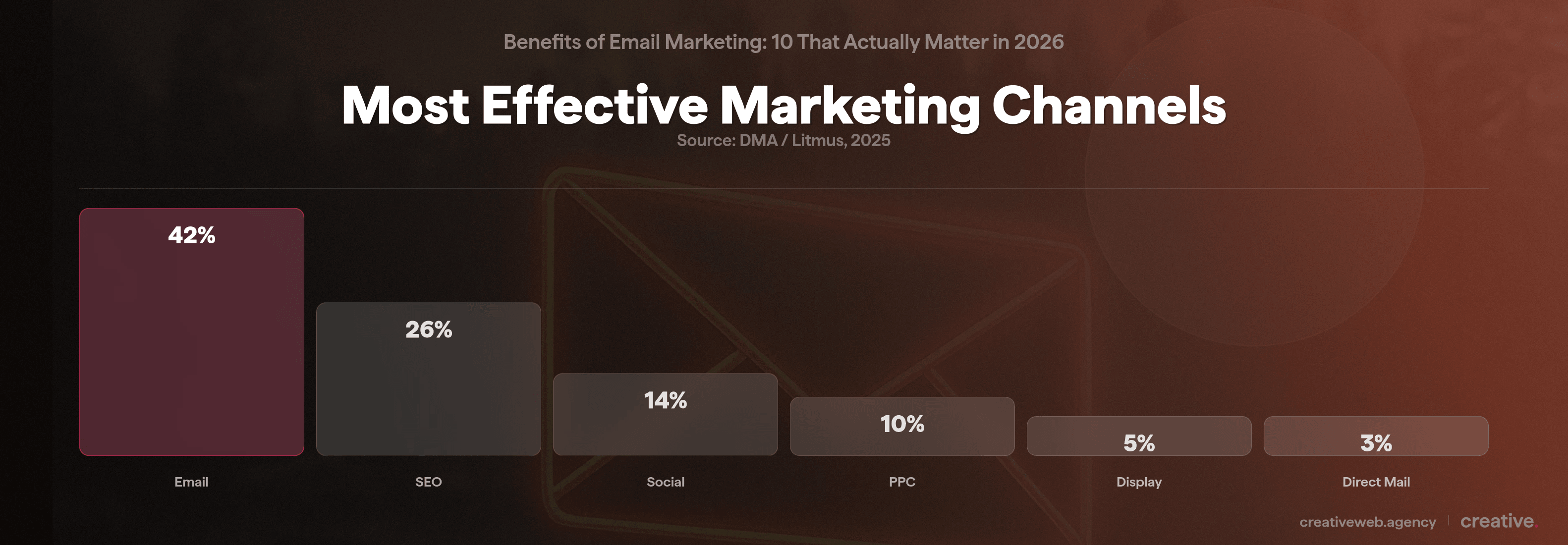
Focus on click-through rates and conversions instead. Those tell you whether people are doing something useful with your emails rather than just whether their email client loaded a tracking pixel. 42% of marketers put email at the top of their channel effectiveness list and that’s not by accident.
Top tip: set up UTM parameters on every link in your emails so you can track which campaigns are actually driving traffic and sales in Google Analytics.
Get more from your email marketing
Need help building an email strategy that actually converts? We can help with the full digital marketing picture.
Explore our digital marketing servicesIt builds trust over time (not overnight)
Email marketing isn’t a quick win. If someone tells you it is they’re selling something.
The real value is in showing up consistently. A regular newsletter that’s genuinely useful builds familiarity. Over time you become the expected voice in someone’s inbox rather than another business competing for attention on social media.
This is the long game. Not flashy. But the businesses that stick with it build audience that actually trusts them, and trust converts better than any ad.
It costs less than almost everything else
Most email platforms have a free tier for small lists. Even at scale the monthly cost stays modest compared to what you’d burn through on on PPC or paid social.
Here’s how the main channels stack up:
| Channel | Cost model | When you stop paying | Ongoing asset? |
|---|---|---|---|
| Email marketing | Monthly fee (often free to start) | List and sequences stay | Yes |
| Google Ads | Per click | Traffic stops | No |
| Social (organic) | Time only | Algorithm decides reach | No |
| Social (paid) | Per impression or click | Reach stops | No |
The difference: PPC rents attention. Email builds an asset. The list stays, the automations keep running and your cost per contact drops as you grow.
So do you need an expensive platform? No. Mailchimp, MailerLite and Brevo all have free plans that handle everything a small business needs to get started.
It drives traffic where you want it
Social platforms want to keep users on their platform. That’s their business model. Getting someone to click a link and leave Instagram means fighting the algorithm.
Email has none of that. Every email can link straight to your website, your landing pages, your blog. No friction, no penalty.
If you’re investing in content on your site (and you should be) email is one of the most reliable ways to get eyeballs on it. I’ve already written about building an SEO strategy which covers the content side of this.
It integrates with everything
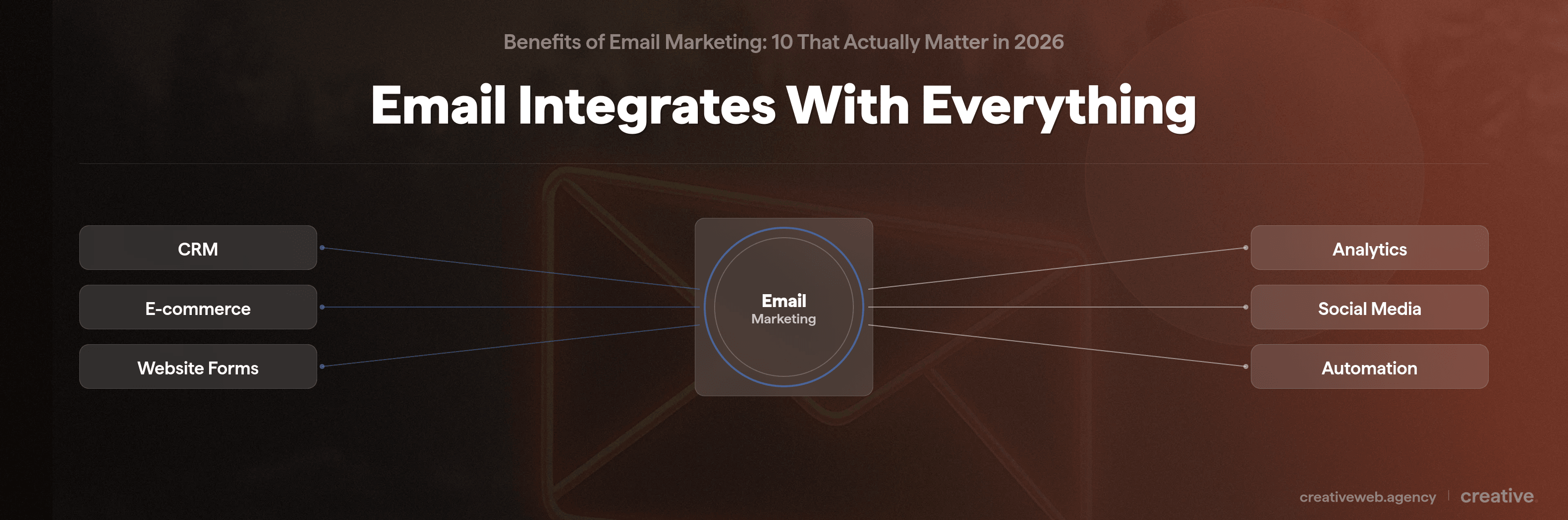
Email doesn’t sit on its own. It plugs into your CRM, your e-commerce platform, your website forms, your analytics. All of it.
That matters because it turns email from a standalone tool into the connective tissue of your whole marketing stack. New lead fills in a form, gets added to your email platform, receives a welcome sequence, gets tagged based on behaviour, eventually gets a sales follow-up. All automated.
TLDR: email is the glue that holds your digital marketing together.
It works for retention, not just acquisition
Most articles about email marketing focus on winning new customers. But email is actually better at keeping the ones you already have.
80% of UK small businesses use email for customer retention according to the DMA. That’s because keeping an existing customer costs far less than winning a new one, and email is the easiest way to stay in touch after someone’s already bought from you.
Post-purchase follow-ups, loyalty offers, product updates, useful content: these are the emails that turn one-time buyers into repeat customers. If you want to build long-term value in your business this is where email shines.
What email marketing won’t do
Right, here’s the section nobody else writes.
It won’t fix a bad product. If what you’re selling isn’t good enough no clever subject line is going to save you.
It won’t work with a bought list. Buying contacts feels like a shortcut but it isn’t. You’ll get terrible engagement, spam complaints and potentially a fine under GDPR.
And it won’t convert if your content is dull. If every email you send is a sales pitch people will unsubscribe. Give them something worth opening.
NB: this isn’t to put you off. It’s to save you the frustration of expecting results from a channel you haven’t set up properly. In our experience the businesses that struggle with email usually have a content problem, not an email problem.
If you’re not using email yet start with a welcome sequence and a monthly newsletter. If you are using it but the results aren’t there take a look at your list hygiene and your content before blaming the channel.
The tool works. You just need to use it properly.
FAQ
-
Is email marketing still effective in 2026?
-
Yes. It consistently delivers the highest ROI of any digital marketing channel, with UK businesses averaging £36 to £38 return for every £1 spent. 42% of marketers say it’s their most effective channel overall.
Did this answer your question? YesThat’s great glad we could help! Start a ProjectNoNo problem, one of our experts can give you a more in-depth answer. Ask our Experts -
What is the ROI of email marketing?
-
The average ROI sits between 3,600% and 4,500%, meaning £36 to £45 back for every £1 invested. The exact number depends on your list quality, segmentation and whether your content is any good.
Did this answer your question? YesThat’s great glad we could help! Start a ProjectNoNo problem, one of our experts can give you a more in-depth answer. Ask our Experts -
How does email marketing help small businesses?
-
It gives small businesses a direct, low-cost way to reach customers without relying on social media algorithms or paid ads. 81% of UK small businesses use email for customer acquisition and 80% for retention.
Did this answer your question? YesThat’s great glad we could help! Start a ProjectNoNo problem, one of our experts can give you a more in-depth answer. Ask our Experts -
Is email marketing better than social media?
-
For conversions and retention, email wins. It’s almost 40 times more effective than Facebook and Twitter combined for acquiring customers. But social is better for brand discovery so they work best together rather than either-or.
Did this answer your question? YesThat’s great glad we could help! Start a ProjectNoNo problem, one of our experts can give you a more in-depth answer. Ask our Experts